If you could prevent a disease….why wouldn’t you?

Vaccine hesitancy is a phenomenon sweeping communities throughout the world, but mainly in the United States. So, what is it? Vaccine hesitancy is distrust or uncertainty when it comes to being vaccinated, and it spreads almost as easily as the diseases it is trying to eradicate. According to The World Health Organization, this widespread pattern of rejecting vaccines is threatening advances in medicine and is being named a top 10 threat of global health in 2019. Just to give you an idea of what else is on this list: air pollution, climate change, global influenza rates, and HIV rates. So let us summarize. Humans are the smartest beings (of course) and we are choosing to put ourselves at risk of disease, knowing that there is a way to lower the chances. Makes sense!
So Where Does This Come From and Why is it Important?
Vaccine distrust stems from a rumor that was long ago medically de-bunked but still lingers in the air. For a while, people thought that vaccines were directly correlated to Downs Syndrome. Now that that myth has been ruled well….a myth, it seems that vaccine hesitancy is now a social-cultural practice. According to medical anthropologist with National Public Radio, in states where it is legal to send your kids to school un-vaccinated, there is social pressure to not vaccinate them. For example, there are some counties in Washington State with a vaccine percentage of less than 48% and parents even admitted to the fact that moving to these communities and having their kids in certain schools, is what changed their medical opinions. And out parents say not to give in to peer pressure……OH THE IRONY.
In Washington State, there was an outbreak of measles, a disease previously ruled almost nonexistent in the U.S due to the creation of a…let me guess…..VACCINE. According to NPR, of the 100 people infected with measles this year in the United States, over 50 of them were in southern Washington State and northern Oregon. This outbreak was so bad that the Governor declared a state of emergency. Let me just repeat myself for dramatic effect…
There was a state of emergency because so many people were sick from a disease that they could have prevented!
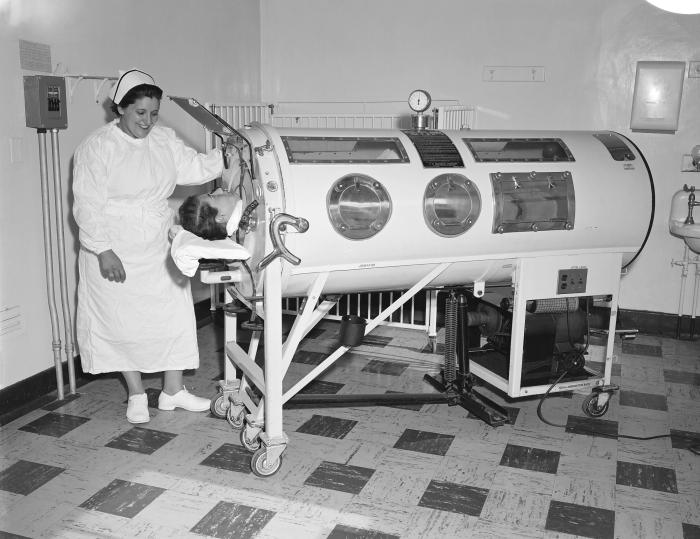
Now, obviously there are other factors that limit the number of people getting vaccinated. These include availability and costs. The world would be a much healthier and better place if vaccines were attainable to everyone in the world. Those that are fortunate enough to have them accessible should take advantage and protect themselves and their children so they don’t have to worry about not being able to breath on their own one day because they got polio. Let’s not forget images like this so that history, for once, doesn’t repeat itself: