Global Eradication
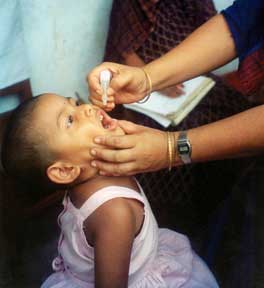
Polio is a virus that attack nerve cells in the spinal cord that can lead to muscle weakness and paralysis. Polio can lead to death if the muscles associated with breathing are effected. This virus is highly contagious through person to person contact and can still be passed around even without the appearance of symptoms. This disease has always been highly feared around the world but back in the 1950’s, it was increasingly prevalent in the United States and caused thousands of cases of paralysis each year. Due to vaccination efforts though, it was declared eradicated in 1979 and the vaccine continues to be administered to maintain a Polio-free country. This is not the case for many countries around the world today, especially Pakistan, Nigeria and Afghanistan where Polio is considered an endemic disease. The CDC and the Polio Global Eradication Initiative are working with scientists and local doctors and caregivers to make the vaccine more accessible to the people in these countries.
Originally and IPV vaccine, or inactivated polio vaccine, was used for immunization but because the virus cannot replicate, the immune response mounted against it is smaller and thus, immunity is shorter-lived. Now, in these endemic countries, an OPV vaccine, or oral polio vaccine, has been the dominant form of immunization as it contains a weakened form of the virus that results in a stronger immune response against the virus and longer immunity. The global eradication effort has been quite successful, but the Polio virus continues to through obstacles at healthcare workers. According to the Polio Global Eradication Initiative, new cases of vaccine-derivative poliovirus have surfaced due to large populations not being immunized. These cases involve new strains of Polio that have mutated from the strain used in the OPV, which is a risk that comes with using live virus as compared to inactivated. Thus, two new goals of the Initiative are to quickly eradicate wild-type virus and stop using OPV world-wide.
New research fostered by the Initiative is to create and start using novel Oral Polio Vaccine (nOPV), a supposedly safer form of oral vaccination that reduces the risk of vaccine-derivative strains. Although I cannot find any documentation of the difference between novel and regular OPV, if there is a vaccine version that is safe and immunogenic, I don’t see why Polio cannot be eradicated globally in the next 10 years. Of course, vaccines are expensive and research is time-consuming, but other countries around the world have the resources and man-power to make this happen and should help our fellow humans around the world survive.
Which Vaccine Type is Better?
As mentioned above, there are two different vaccine types used for Polio. The first is Intravenous Polio Vaccine (IPV). This vaccine is made of inactivated virus that has been treated to be non-infectious but still maintain its epitopes. This means that it cannot replicate within the host. An advantage of this vaccine type is that the virus cannot revert to its wild-type (become infectious). Disadvantages of IPV vaccines include the mounting of a smaller response to the virus since it is inactivated, and thus result in a shorter immunity period. Also, regular boosters are needed to continue to increase the immunity.
The other type of vaccine used is Oral Polio Vaccine (OPV). This vaccine is made from an attenuated virus that is a weakened form of the pathogen that is still able to replicate within the host. The fact that it replicates induces a mild form of infection that has no side affects and is usually undetectable which results in a stronger immune response and results in a longer immunity. There are some disadvantages of this form as well. One is that the virus can sometimes mutate back to the wild-type form and become more infectious and spread this infection to other people in a more severe form. Another disadvantage is it requires refrigeration and is unsafe for young children, pregnant women, and elderly persons.
It is hard to say which vaccine type is better because it depends on the situation. In some cases, OPV is going to be the better option because it is the only way to stop transmission when an outbreak is occurring, according to the World Health Organization. The refrigeration aspect is an obstacle in third world countries though, like Afghanistan and Pakistan and the fact that the virus can wake back up. This leads to the fact that IPV is being reintroduced and used more around the world mainly because of the risk of wild-type emergence. Most countries are converting to three doses of IPV or one larger dose if capable.
It is encouraging to know that there are specific organizations being put in place to eradicate this disease. It still seems that Polio, for now, has the upper hand since it is finding away to mutate in the presence of the vaccine. As long as people continue to choose vaccination, the war will be over soon….


