Salmonella

Salmon + Nutella = …….wait no

Salmonella is a Gram-negative bacteria that can cause signs and symptoms like diarrhea, abdominal cramps, nausea, vomiting, and other bad stuff. It works by attaching to the epithelial cells in the small intestine and making such cells engulf them so that it can multiply. After it is released by exocytosis, macrophages come to consume it which causes inflammation. It is the disease that is the reason your mom tells you to not eat raw cookie dough. Salmonella is famously associated with raw eggs and uncooked chicken. According to the CDC, there was actually a recent outbreak of Salmonella coming from uncooked chicken products, such as pet food and live chickens. What is so unusual about this though is that it was not Salmonella typhimurium, which is the strain known to infect humans, but Salmonella infantis. This outbreak came out of literally no where, the CDC could not pin down the chicken supplier, and it infected 92 people in 29 different states. A major disadvantage of this disease is that to treat it, you have to let it run its course. Antibiotics are used only if it gets to the tissues and bloodstream. So this is a warning to all….MAKE SURE YOU COOK YOUR CHICKEN PROPERLY.

Avoid raw eggs and I’m fine, right?

WRONG! In another outbreak article, Salmonella has been reported to be transmitted by …..drum roll please……..HEDGEHOGS!

It is known within the science community that organisms other than chickens can transmit the disease, such as turtles, but hedgehogs was not previously on the list. According to a recent media statement by the CDC, eleven people, mostly children, from eight different states had contracted Salmonella from their pet hedgehogs. The transmission of the disease is carried out through feces, despite the fact that hedgehogs are supposed to be relatively clean animals. The CDC even recommended not kissing or holding the hedgehogs to close to one’s face in order to prevent the fecal contamination from reaching an easy portal of entry. Why have a pet if you can’t cuddle it, right?

So for all of the parents out there wanting to get their kids an easy to take care of, semi-exotic pet, don’t choose a hedgehog. Just go for the cat or dog. Simple as that.

Vaccine Hesitancy

If you could prevent a disease….why wouldn’t you?

Vaccine hesitancy is a phenomenon sweeping communities throughout the world, but mainly in the United States. So, what is it? Vaccine hesitancy is distrust or uncertainty when it comes to being vaccinated, and it spreads almost as easily as the diseases it is trying to eradicate. According to The World Health Organization, this widespread pattern of rejecting vaccines is threatening advances in medicine and is being named a top 10 threat of global health in 2019. Just to give you an idea of what else is on this list: air pollution, climate change, global influenza rates, and HIV rates. So let us summarize. Humans are the smartest beings (of course) and we are choosing to put ourselves at risk of disease, knowing that there is a way to lower the chances. Makes sense!

So Where Does This Come From and Why is it Important?

Vaccine distrust stems from a rumor that was long ago medically de-bunked but still lingers in the air. For a while, people thought that vaccines were directly correlated to Downs Syndrome. Now that that myth has been ruled well….a myth, it seems that vaccine hesitancy is now a social-cultural practice. According to medical anthropologist with National Public Radio, in states where it is legal to send your kids to school un-vaccinated, there is social pressure to not vaccinate them. For example, there are some counties in Washington State with a vaccine percentage of less than 48% and parents even admitted to the fact that moving to these communities and having their kids in certain schools, is what changed their medical opinions. And out parents say not to give in to peer pressure……OH THE IRONY.

In Washington State, there was an outbreak of measles, a disease previously ruled almost nonexistent in the U.S due to the creation of a…let me guess…..VACCINE. According to NPR, of the 100 people infected with measles this year in the United States, over 50 of them were in southern Washington State and northern Oregon. This outbreak was so bad that the Governor declared a state of emergency. Let me just repeat myself for dramatic effect…

There was a state of emergency because so many people were sick from a disease that they could have prevented!

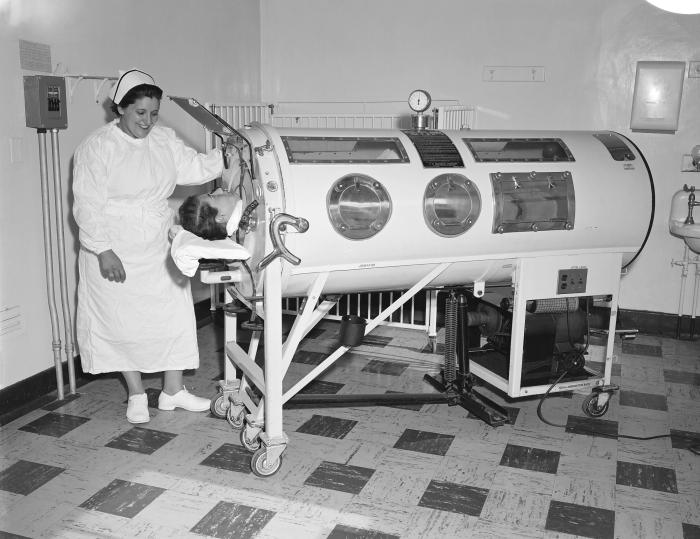
Now, obviously there are other factors that limit the number of people getting vaccinated. These include availability and costs. The world would be a much healthier and better place if vaccines were attainable to everyone in the world. Those that are fortunate enough to have them accessible should take advantage and protect themselves and their children so they don’t have to worry about not being able to breath on their own one day because they got polio. Let’s not forget images like this so that history, for once, doesn’t repeat itself:

Antibiotic Resistance

Fight the Resistance!……..sounds like Star Wars

What is CRE?

CRE stands for Carbapenem-Resistant Enterobacteriaceae. Now let’s bring it back to the basics. Carbapenems are a class of antibiotics that work by slowing or stopping the cell wall synthesis in Gram-positive and Gram- negative bacteria. They are a part of the beta-lactam Antibiotics that prevent cross-links from forming on the cell well by competing with bacterial enzymes for the process. They are super cool though because, unlike other antibiotics in this category, they are not inhibited by extended-spectrum beta-lactamase so they are used as a last resort medication. Wahoo! So, they are more likely to work unless the bacterium produced a carbapenemase….but that is beside the point.

Ok…Ok… But Why Is This Important?

Antibiotic resistance is becoming a real issue in today’s society because over the years, antibiotics have been prescribed for everything and now bacteria are learning to cope and survive in the presence of medications with the help of efflux pumps (pump the antibiotic from the bacterial cell) and impermeable outer-coats and membranes. But there is A NEW HOPE (another Star Wars reference)! According to Maria Cohut with Medical News Today, there is a new drug being tested that is showing positive results against bacterial UTI’s caused by Escherichia coliKlebsiella pneumoniae, or Pseudomonas aeruginosa, which are all CRE bacteria. This new antibiotic, cefiderocol, works to trick the bacterial cells into allowing the antibiotic through the Gram-negative cell wall. These specific bacteria depend on iron to survive. The immune response is to create an environment lacking iron, thus the bacteria increase their uptake. Cefiderocol binds to iron molecules and catches a ride into the cell. From there, the antibiotic can prevent cell-wall synthesis.

The fact that there are new antibiotics being discovered, genetically manipulated, and tested is really encouraging when there is such an issue with resistant bacteria. But, in order to not let history repeat itself, I hope health care professionals prescribe in a more conservative way to prevent mutations and resistance from spreading.

Yay We Are Winning The War….Or Are We?

Although more drugs are being researched to fight bacteria, the bacteria themselves are still adapting and becoming resistance. As resistance became more prevalent, health care facilities hunkered down on cleaning measurements. Now just after a few years, there are strains of bacteria becoming resistance to the alcohol-based disinfectants used in hospitals, such as hand rubs. According to Tim Newman with Medical News Today, a bacterium called Enterococcus faecium has adapted in the presence of these alcohol-based disinfectants. Scientists have tested the sensitivity of bacteria samples from different years and the results show that since 2009, the bacteria has become increasingly resistant to isopropyl alcohol. And now, E. faecium is becoming a leading cause of hospital-acquired infections. Although this study is recent and is in the first stages of development, it is really scary to think that the best cleaning mechanisms we can efficiently use are becoming…well pointless.

I mean, if our best defenses are falling to bacteria, what do we do now? Bacteria have been around since forever and humans haven’t, so what does that say about the future? Well, if we just all move to space and use lightsabers as protection, maybe that will help.

FMT, Microbiota, and CRAAP

“You’re transplanting what???

Fecal Microbiota Transplant is a fairly new practice for replacing the microbiota in someone’s intestinal tract. Using donor feces, the patient is given an enema to flush their bowels and colon with properly working microbiota. This form of treatment is currently in different stages of clinical trial for the treatment of Clostridium Difficile, C.Diff for short. C. Diff is a bacterium that is in the gut microbiome of every single person that becomes harmful when the other natural microbiota in the GI Tract are destroyed, usually by antibiotic use. When those internal defenses are broken down, the C. Diff bacteria can cause watery diarrhea, dehydration, muscle cramping, vomiting, and in some cases dysentery. Thus, C. Diff most commonly affects older adults after hospital stays. This disease is most often treated with rounds of oral vancomycin or fidaxomicin.

So, why are we sharing poop? What is the benefit in all of this? According to the National Institute of Health and the CDC, 20% of people who are treated for Clostridium Difficile using those oral medications experience return of the disease. Also not to mention, it can get rather expensive. Thus scientist have began to question if these oral medications are the best treatment if theres a pretty significant chance the problem could return. So, since FMT replaces destroyed or ineffective gut microbiota using someone else’s good microbes, why not build back up internal defenses to rid the effects of C. Diff? This exactly what clinical trials are testing at the moment and also observing the long term effects of FMT. In the next few years, a double-blind trial will take place under various Medical centers to do a controlled study on the effectiveness of FMT on reoccurring Clostridium Difficile. If positive results are obtained, the scientists will follow-up with the successful cases for three years afterwards to record any longterm effects the fecal transplant may have had.

Given that the symptoms of C. Diff are so intense and without proper hydration and care can lead to death, I think borrowing someone else’s good microbiota could be a good thing. Not to mention, if this is a successful treatment, the use of antibiotics would go down for at least one disease. Yay for not supporting microbial resistance to antibiotics!

Diseases and Our Internal Defenses

Clostridium Difficile is one of many diseases associated with the microbiome inside our human bodies. Another disease that caught my eye was Non-Alcoholic Fatty Liver Disease. An article posted in the Cellular and Molecular Life Sciences Journal describes the research being conducted on the role that dysbiosis has on the epithelial barrier in the liver. Scientists are manipulating the gut microbiome through the use of probiotics, synbiotics, and probiotics in NADLF patients and seeing positive results! According to the article, the dysbiosis of the microbiome weakens the hepatic epithelial layer and allows for more bacteria to enter cells which leads to hepatic inflammation. And to go along with the conversation from before, FMT is being looked at as a possible solution!

Like I said before, there are numerous diseases associated with abberrant microbiota. A brief list may include obesity, inflammatory bowel disease, diabetes mellitus, metabolic syndrome, arteriolosclerosis, and some cancers. Although FMT may not work to treat all of these, it is comforting to know that science has revealed our tiny internal soldiers and we are working on ways to support the troops as much as possible.

CRAAP

You probably thought we were done discussing crap, didn’t you? …… cricket….cricket…

In all seriousness, CRAAP is a set of guidelines to find refutable sources and I feel as though my sources match majority, of not most of the criteria. To begin, C stands for currency. This applies to publication date, when the article was updated, and if the site itself if functional. R means relevance. This is asking if the data found is relevant to your research question or project and if the source is helpful in furthering the reader’s understanding of the topic. The first A is for authority. Who is the author? Who is the publisher? What makes the scientist experts in this field and why should we trust what they say? The second “A” is for accuracy. This brings into question if the presented information correct. One can find out the answer by looking at how many times and who has cited the source or comparing it to other journals or articles of similar content. And finally, P is for purpose. This questions why the article was published and why the research was done? Who was the audience and does the language indicate bias?

Applying the criteria above, I will now review my first source. This article was published just seventeen days ago. The material has yet to be updated because it is a mere two weeks old. Also, the trials being conducted are going to last a few years, so there are bound to be updated released. As for relevance, the article on discussing new clinical trials regarding FMT and the long term effects of reoccurring C. Diff. The publisher of the article is the National Institute of Health under the U.S Department of Health and Human Services. Although there is no specific author named, the site and sponsor are enough to verify the information. Also, the medical centers conducting the trial are world renown research facilities. One of them is right down the road, Duke University Medical Center. Because these trials are in the process of happening now, accuracy is hard to pinpoint without results, just yet. But, the explanations of the disease and the mechanisms of microbiota described are correct. The purpose was not to sell anything or take away from the audience, but rather to inform the general public of advancements in medicine and how longterm effects are being taken into account when new treatments are being investigated. There are no opinions to be made when factual evidence is put forth and research is being conducted without bias.

Now for the second article. This piece was published online six days ago and in text, but it was first received by the journal in August of 2018. Also, it was updated in December. The article contains information regarding research done of Non-Alcoholic Fatty Liver Disease patients, which is a microbiota-associated disease. Thus, the information is pertinent to this blog. The publishing journal is Cellular and Molecular Life Sciences, which is based in Switzerland. The article is followed by quite a few references and the website claims 169 citations. The fact that the journal is peer-reviewed gives it some authority and implies accuracy. Also concerning the correctness of the information, the description of the role of the microbiome in association with liver disease does align with further research conducted on this topic. And finally, the purpose of this article was to inform the general public about the role that the microbiome plays in a significant disease, and how treatment options are being explored.

For the reasons stated above, I do think my sources follow CRAAP criteria.